
Start with the food
Neutral oils are flexible when you want the food and seasoning to lead. More flavorful oils can be useful for gentler pan-frying, but the flavor should suit the dish. A cutlet or a plate of fries should taste of the food; a fried egg in a little olive oil can taste of the oil, and that may be exactly what you want.
Ask one question before you open the cupboard: should the oil be a background or a flavor? Background points to a neutral oil. A flavor on purpose points to a smaller amount in a pan.
Match oil to heat
For deep-frying, choose an oil intended for high heat, such as canola, peanut, sunflower or vegetable oil. The USDA lists several suitable oils; flavor, allergies, cost and the recipe still matter. For a small amount of pan oil, you have more freedom to choose for flavor.
Deep-frying holds a large volume of oil at frying temperature for many minutes, so the oil has to tolerate that. Pan-frying uses a thin film for a short time, which is why more flavorful oils can work there. If you are unsure which category a recipe sits in, the pan, shallow or deep guide sorts common foods by method.
A quick way to compare
- Neutral and high-heat (canola, vegetable, sunflower): the all-round choice for deep-frying, breaded cutlets and anything you want to taste of itself.
- Peanut oil: a traditional deep-frying choice. Check for allergies first, and tell anyone you are cooking for.
- Flavorful oils (olive, sesame, butter): better in a small pan for gentler cooking, or as a finishing flavor, than as the main oil in a deep pot.
The site compares two common choices side by side in canola vs vegetable oil and peanut vs canola oil.
Measure the oil, not the label
A smoke-point figure varies with the oil and its condition. Use a deep-fry thermometer to watch the oil in the pot. If it smokes, turn down or turn off the heat and let it cool. Do not keep cooking in smoking oil.
Oil that has been used before tends to smoke and foam sooner than fresh oil, so the same temperature can behave differently from one batch to the next. The thermometer tells you what the pot is doing today. For how to hold the temperature steady, see keeping frying oil at temperature.
Think about cost and quantity
Deep-frying needs a lot of oil, and pan-frying needs very little. That changes the sensible choice. A modest bottle of a neutral oil makes sense for a pot you will refill; a small amount of a pricier oil makes sense for a skillet. If you want to reuse oil, a neutral oil that stays clean-tasting gives you more batches to work with. Our guide to how much oil to use covers pot size and fill lines.
Keep water out
Dry food, utensils and the pot before they touch hot oil. Water flashes to steam in hot fat and can throw oil outward. Never pour water into hot oil or use water on an oil fire. Splatter has several causes; why frying oil splatters walks through them.
Allergies and shared oil
Peanut oil, and oil that has already cooked fish, shellfish or other allergens, can carry flavor and allergen risk into the next food. If anyone at the table has an allergy, use fresh oil and clean equipment rather than reusing oil from a previous batch, and ask the person what they can eat instead of guessing.
After frying
Turn off the heat and let the oil cool completely. If the oil has not burned and still smells clean, strain and store it in a sealed, light-proof container. Discard oil that foams, smells off or looks cloudy. Follow local recycling or disposal rules; never pour oil down a drain. What to do with used frying oil has the full steps. If food tastes off after frying, this troubleshooting page helps separate old oil from other causes.
Put it into practice
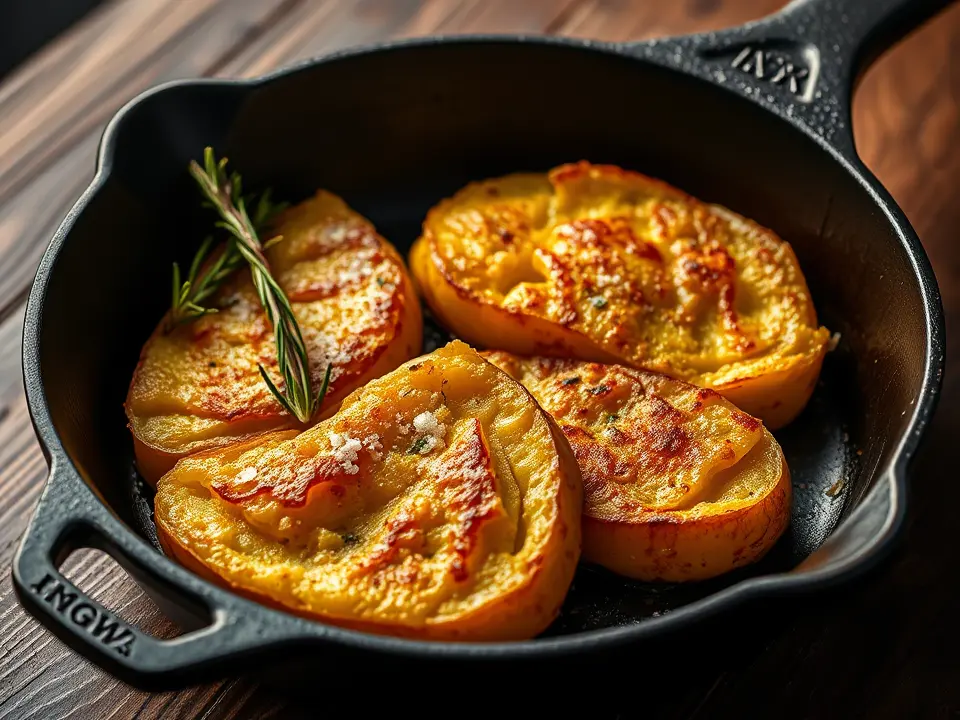 Crispy smashed potatoes
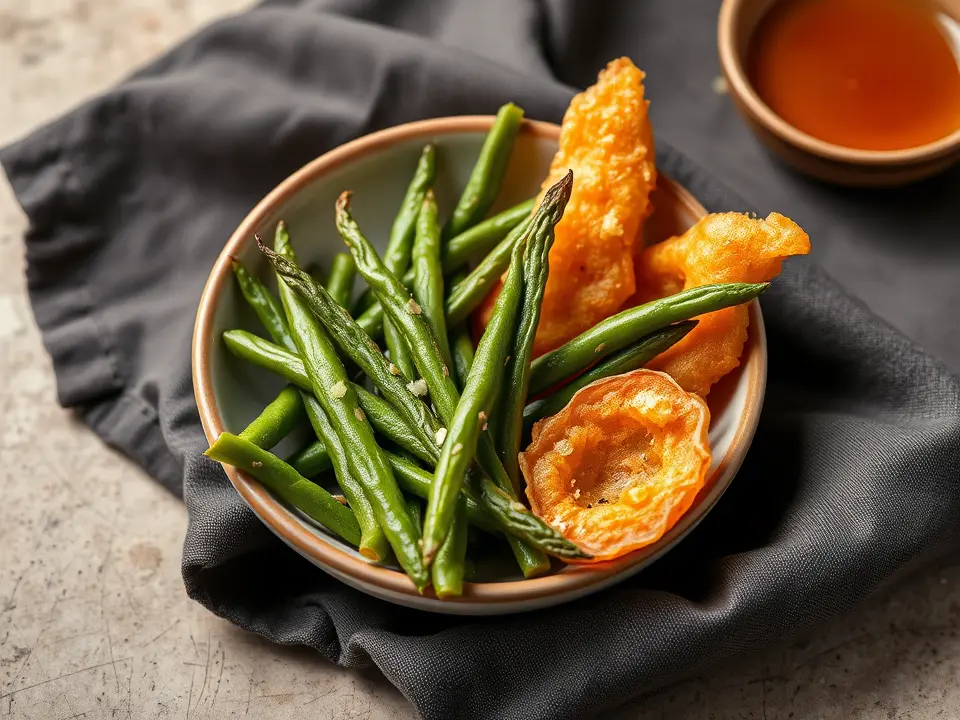 Quick vegetable tempura
Safety references
Check current guidance when cooking for food safety.