
Match the depth to the method
Oil depth depends on the method and the size of the food. For pan-frying, add enough oil to coat the skillet bottom; the food still browns against the hot pan. For shallow frying, oil reaches partway up the food, often about halfway up a cutlet. Turn it to brown the other side. Deep frying needs enough oil to submerge the food or let it float with room around it. Turn floating pieces as needed for even color.
The skillet's width and the food's thickness matter more than a fixed number of tablespoons. A thin piece may need only a film; a thicker breaded piece needs enough oil to reach its sides. The pan, shallow and deep frying guide helps you choose the method before you choose the pot.
Leave room above the oil
For a stovetop deep-frying pot, Iowa State University's food preparation manual says to fill the kettle only one-third to one-half full with oil. Treat half full as a ceiling, not a target: if your planned batch leaves little space for bubbling, use less oil, a deeper pot or a smaller batch. USDA FSIS says to fill a deep fryer to its recommended level and to leave space for oil to rise when food is added. Follow your fryer's marked minimum and maximum levels and its manual rather than applying the stovetop fraction to an appliance. The frying safety guide covers the rest of the station.
The level rises when food goes in, and bubbling can climb higher still. The cold fill level alone cannot tell you whether a crowded batch will stay below the rim.
Displacement and foaming
Food and a frying basket displace oil, so the level climbs as you lower them. Surface water turns to steam in hot oil and can make it spit and bubble hard. A loose coating can also shed into the oil. The size of that surge varies with the batch; a water test cannot predict it exactly.
If oil reaches the rim, it can spill onto the burner and ignite. Pat food dry, lower small batches gently away from you, and keep the bubbling well below the rim. Why food goes soggy explains how crowding also cools the oil and softens a crust.
Pick a pot with headroom
Choose a stable, heavy, deep pot with room above the planned oil level. Check that the oil will cover the food without taking up more than half the pot's height before you add anything. If the food needs more depth, choose a taller pot or fry a smaller batch. A wide, shallow pan with the same stated capacity gives you less headroom.
Set the pot securely on the burner, keep a fitting lid close by, and turn any handles away from the stove's edge. The batch size in classic French fries still has to fit your pot with room for bubbling; divide it further if it does not.
Measure with water before you heat
Before heating anything, pour a measured amount of cold water into the empty pot to the oil depth you plan to use. Keep that level at or below the stovetop limit. Lower the empty frying basket, if you will use one, to see how much space it takes. For a large solid item, USDA FSIS describes a cold-water displacement test for a whole turkey: put the item in the vessel, add water to cover it, then remove it and measure the remaining water. That remaining amount is the oil amount for that test. The turkey procedure is for outdoor frying and does not make a stovetop pot suitable for a whole bird.
Empty the pot and dry it, the basket and any food that touched water completely before oil goes in. Clean any surfaces touched by raw food. Water checks the still-water level only: steam and bubbling need extra headroom. If the test level is already close to the rim, change the pot, batch or oil amount before heating.
Safety habits while it heats
- Never leave hot oil unattended, even for a quick errand.
- Keep water, ice and wet utensils away from the pot.
- Keep stovetop oil at or below half the pot's height; follow the fill markings and manual for an electric fryer.
- Lower food in gently, away from your body, never dropping it from height.
- For a small contained pan fire, slide a fitting lid over the pot and turn off the heat if you can do so safely. Do not move the pot or lift the lid until it cools. If the fire grows or you are unsure, leave and call emergency services. Never use water on an oil fire.
Put it into practice
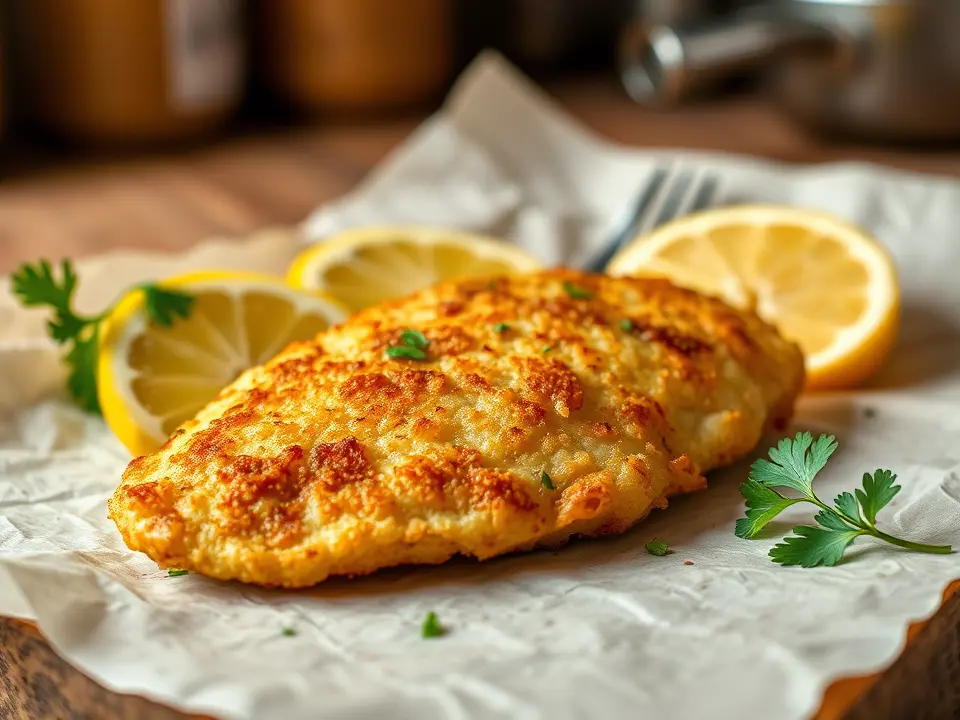 Golden chicken cutlets
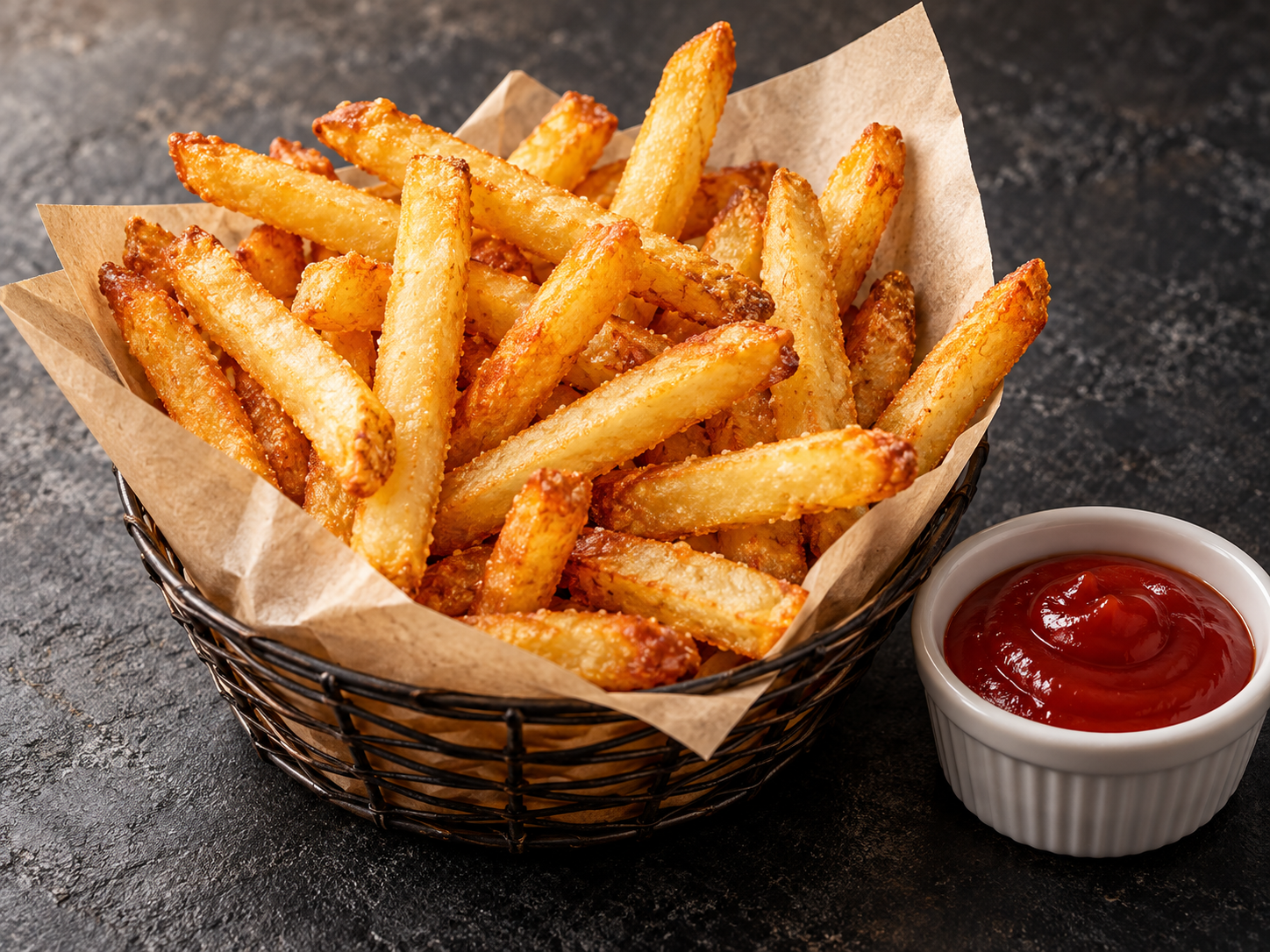 Classic crispy french fries
Safety references
Check current guidance when cooking for food safety.