
Peanut oil vs canola oil for deep frying
Traditional Southern flavor or clean neutrality — the practical case for each.
Peanut oil is the traditional choice for deep-frying fried chicken and a turkey, and it adds a subtle savory backdrop. Canola oil is neutral, widely available, allergy-safe, and works just as well at the same temperatures. Use peanut oil when you want flavor character; use canola when you want the food's seasoning to be the whole story, or when a tree-nut or peanut allergy is a concern.
Peanut oil
Pressed from peanuts, it has a mild savory aroma that is traditional for deep-frying fried chicken, whole turkeys, and donuts in Southern cooking.
Pros
- Adds a subtle, savory background flavor familiar from traditional fried chicken
- Well suited to very high heat deep-frying
- Refined peanut oil handles repeated uses cleanly
- The go-to oil for outdoor turkey fryers
Cons
- Peanut allergy is one of the most common food allergies; unsuitable when cooking for guests with unknown allergy status
- Typically more expensive than canola or vegetable oil
- Less widely available than canola in some regions
Best for: Traditional fried chicken, whole fried turkey, and any fry where you want the classic deep-fry flavor
Canola oil
A neutral, widely available oil that is suitable for high-heat frying at the same temperatures as peanut oil, without the allergen concern or the added flavor.
Pros
- Completely neutral — seasoning and coating carry all the flavor
- No peanut allergy concern
- Available in any grocery store in any size
- Usually less expensive than peanut oil
Cons
- Lacks the subtle savory note of peanut oil
- Some cooks prefer the traditional flavor character peanut oil provides
Best for: Any frying where neutral flavor is preferred, or when cooking for guests with peanut allergies
The flavor difference
Refined peanut oil has a mild, slightly savory aroma that many cooks associate with the specific flavor of classic deep-fried chicken. It is noticeable but not strong. Canola oil is neutral enough that you will not taste the oil itself; the fried food tastes entirely of its seasoning and coating. Neither is objectively better — it depends on whether you want that traditional background note.
Both handle the same temperatures
Most home deep-frying happens between 325°F and 375°F. Both refined peanut oil and canola oil are rated for high-heat cooking and behave reliably in that range. There is no technical frying advantage to one over the other; the choice is flavor and allergy.
The allergy consideration
Peanut allergy is one of the most common and serious food allergies. If you are cooking for guests or a large group and are unsure of allergy status, canola oil is the safer default. Highly refined peanut oil is treated differently by some guidelines, but for home cooking with unknown guest profiles, canola removes the risk entirely.
Cost and availability
Canola oil is sold in every grocery store in large jugs at a lower price than peanut oil. If you are filling a large outdoor turkey fryer (which can take 3–5 gallons), the cost difference adds up. Peanut oil is widely available around the holidays at club stores in gallon jugs, which brings the price down.
Reusing the oil
Both oils can be strained and reused if they still smell clean after frying. Peanut oil retains its subtle flavor; if you fry fish in it, the next batch of chicken will pick up traces of that. Canola oil is the better choice when you fry a variety of things in the same oil.
Frequently asked questions
- Is peanut oil better than canola oil for fried chicken?
- Peanut oil is the traditional choice and adds a subtle savory flavor that many cooks associate with classic fried chicken. Canola oil produces equally crispy, well-cooked chicken with a completely neutral flavor profile. Which is "better" depends on whether you want that background note.
- Can I substitute canola oil for peanut oil when deep frying?
- Yes, directly and with no technique change. Both oils handle the same frying temperatures and produce the same level of crispiness. The only difference is flavor.
- Does peanut oil smoke less than canola oil?
- Both refined peanut oil and refined canola oil handle typical deep-frying temperatures well. Use a thermometer and reduce heat if the oil starts to smoke, regardless of which oil you are using.
- Is peanut oil safe if someone has a nut allergy?
- Peanuts are legumes, not tree nuts, but peanut allergy is one of the most common and serious food allergies. If you are cooking for someone with a known peanut allergy, use canola oil.
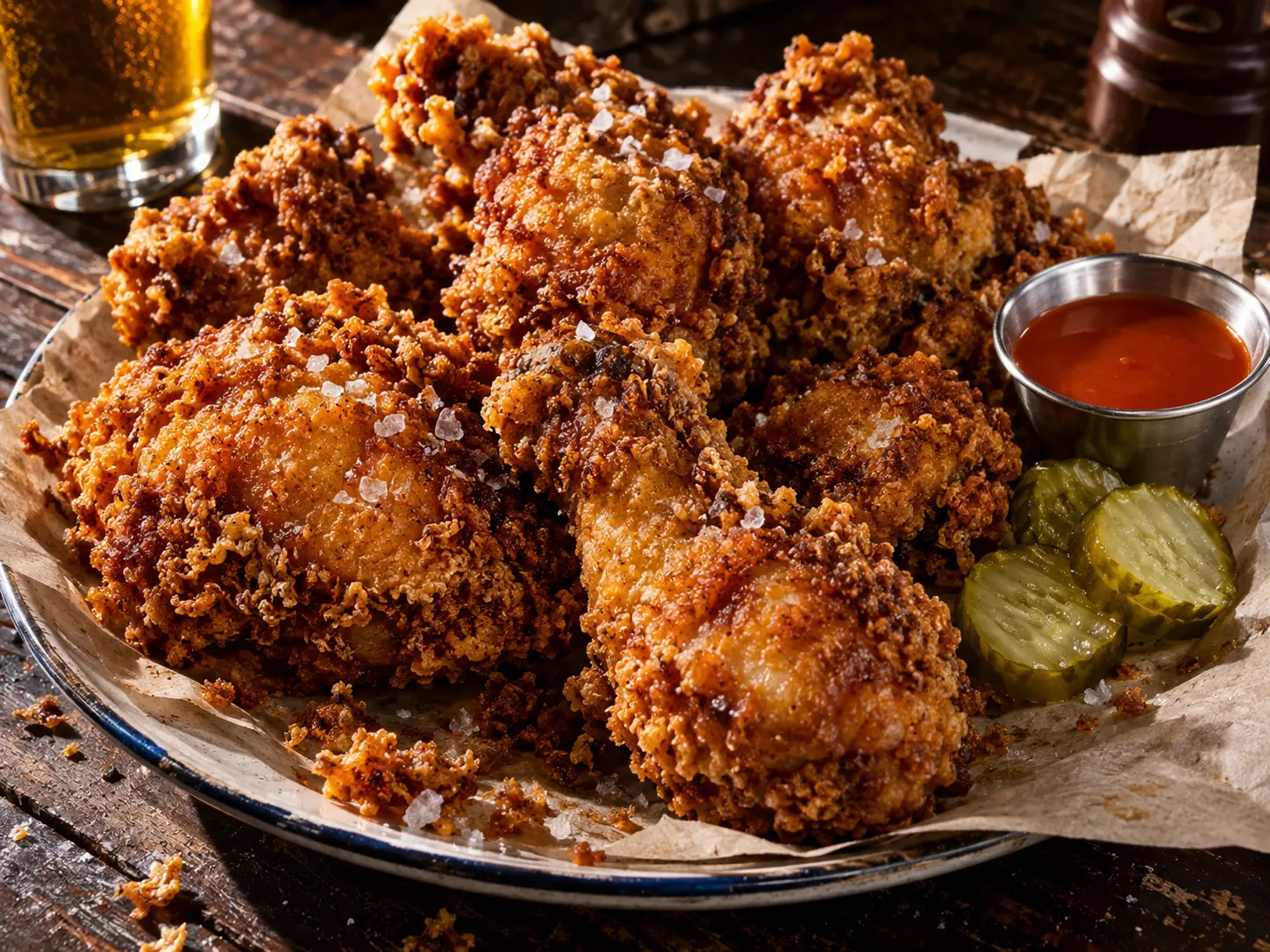 Craggy buttermilk fried chicken