
Crispy deep-fried chicken wings
An overnight salt and baking-powder brine sets up the blister; sauce at the table keeps it.
Print recipe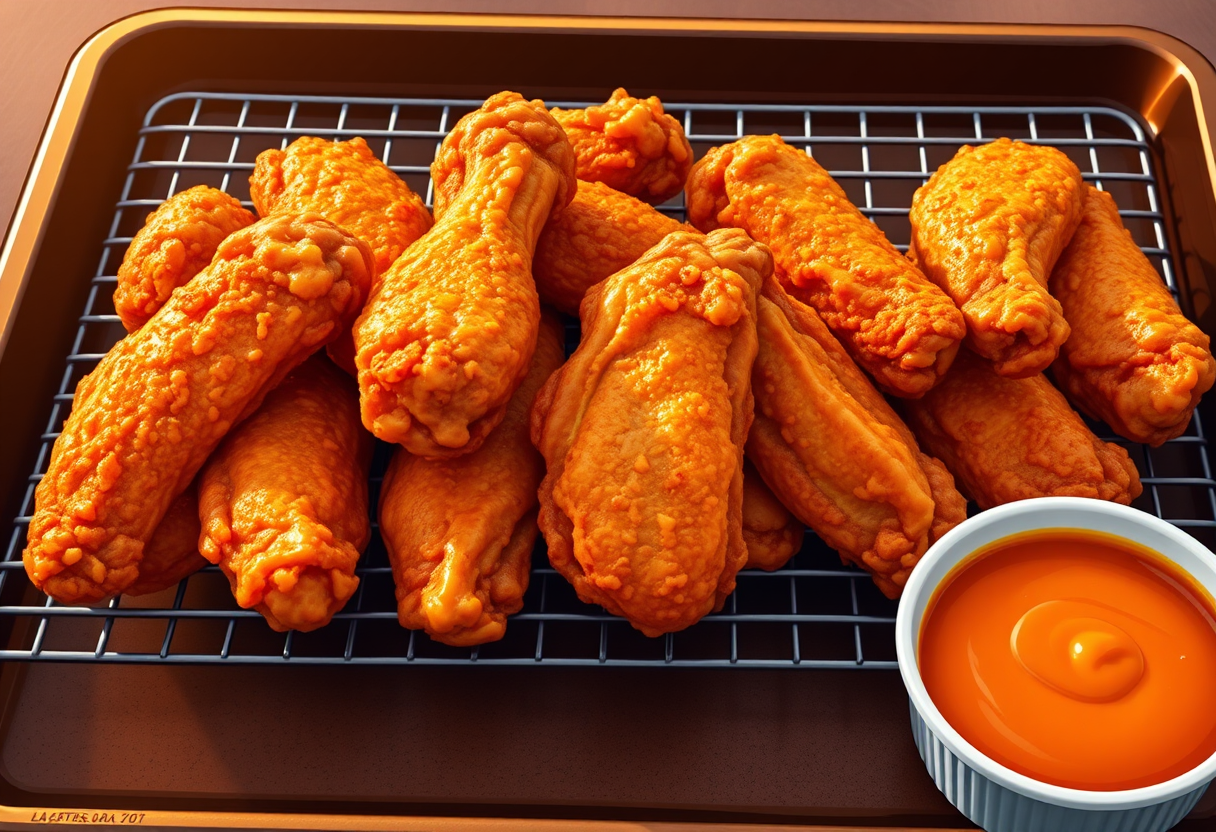
Let's make it.
- Pat the wings completely dry. Mix the salt and baking powder, then toss with the wings until every piece is evenly coated. Spread in a single layer on a wire rack over a sheet pan and refrigerate uncovered for at least 8 hours or overnight. By the time you fry, the surface should look dry and slightly powdery.
- Pull the wings from the refrigerator 30 minutes before frying. Mix the paprika, garlic powder, and pepper, then toss with the wings to coat.
- Pour oil to a depth of 3 inches in a heavy pot, following its safe fill level. Clip a deep-fry thermometer to the side and have a wire rack, long tongs, and a landing tray ready. Heat the oil to 375°F (190°C).
- Lower wings into the oil in small batches away from you; crowding drops the oil temperature and leaves the skin heavy. Fry for 10 to 12 minutes, adjusting the heat to keep the oil between 350 and 375°F and turning the wings once or twice, until the skin blisters and turns deep golden brown.
- Lift a wing and check the thickest part away from the bone with an instant-read thermometer: poultry is safe at 165°F (74°C). Return any undercooked wings for another minute and recheck. Drain on a wire rack — not a plate — and let the oil recover to 375°F before the next batch.
- For a wet sauce: stir hot sauce into the melted butter and toss the wings immediately after draining while the skin is still hot. Serve at once; sauced skin softens within a few minutes. For a dry-rub finish: skip the sauce and dust the hot wings with a second pinch of the spice mix instead.
The baking powder in the brine is doing real work: it raises the pH of the skin, which speeds browning and helps fat render more completely. Leaving the wings uncovered in the refrigerator overnight dries the surface further. Both steps together produce noticeably more blister than skipping them.
Why it works
Salt draws a small amount of moisture to the surface and then back in via osmosis, tightening the proteins and firming the skin before it meets the oil. Baking powder raises the pH of the skin and introduces fine gas that helps it puff and separate from the fat underneath. Refrigerating uncovered lets that surface moisture evaporate, so the skin enters the oil already partly dry. If you want more texture at the cost of extra time, a double fry delivers it: first at 325°F (165°C) until each wing reaches 165°F (74°C) inside, then a 10-minute rest on a rack, then back into 400°F (205°C) oil for 3 to 4 minutes. The rest lets remaining surface moisture escape before the second heat stage, and the result is harder, more blistered skin. It is not worth the two-temperature setup unless you have time to manage it.
Serve it
Wings soften quickly once sauced, so have the sauce ready before the wings come out of the oil. For a buffalo plate, melt the butter first, stir in the hot sauce, and toss the wings in the bowl right at the rack. For a plain dry-rub plate, add extra spice while the wings are still steaming so the heat blooms the seasoning without softening the skin.
If it goes wrong
If the skin darkens before the center reaches 165°F, lower the oil temperature by 25°F and allow a longer cook. If the skin looks pale and leathery rather than blistered, the oil was too cool or the pot was crowded; finish in a 425°F oven for 5 minutes rather than re-frying. If the wings taste too salty, reduce the salt to half a teaspoon in the dry brine next time.
For meat and seafood, use a food thermometer and the current safe minimum temperature chart to verify doneness. Keep water away from hot oil.
Oil temperature reference: FoodSafety.gov: Safe minimum internal temperatures.
Air fryer use reference: USDA: Deep Fat Frying and Food Safety.
Compare pan, shallow and deep frying
← More recipes