
Lemon pan-fried fish
A light flour dusting protects tender fillets and builds a crisp finish.
Print recipe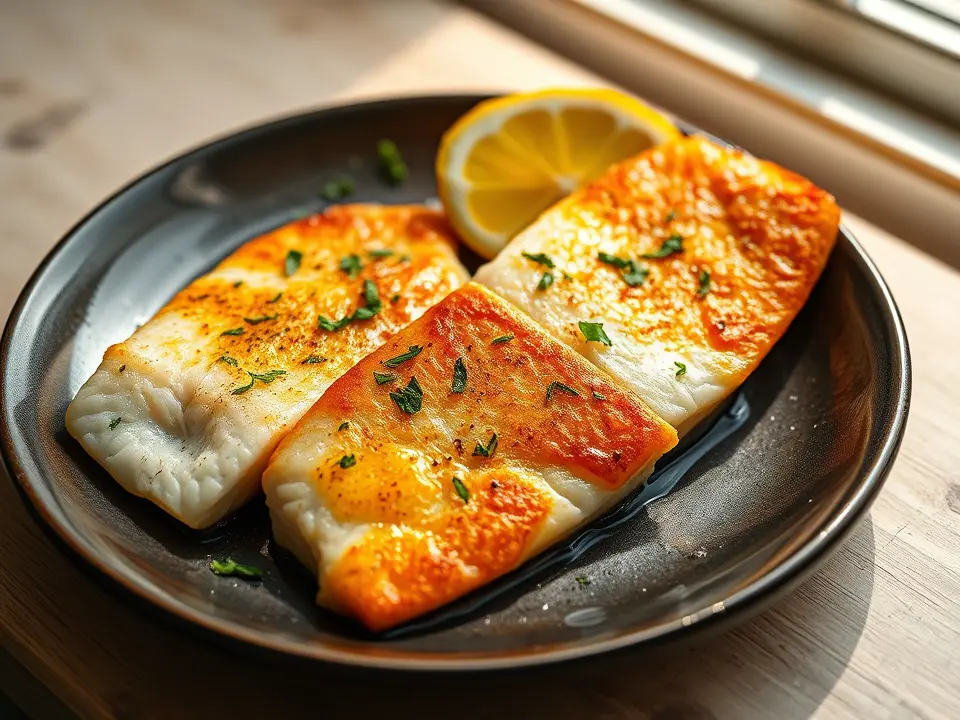
Let's make it.
- Pat fish dry and season. Dust very lightly with flour, shaking off excess.
- Heat oil in a skillet over medium-high heat until it shimmers. Lay fish away from you and leave it undisturbed; a thin fillet can tear if moved before the crust releases.
- Turn carefully with a thin spatula and finish cooking until the thickest part reaches 145°F (63°C) on a food thermometer.
- Lower heat, add butter and a squeeze of lemon, and spoon the pan juices over the fish. Finish with herbs.
A thin coating is enough. Too much flour turns gummy instead of crisp.
Why it works
Drying the fish lets the light flour dusting cling without forming a thick paste. Shake off any flour that does not cling; a heavy layer can turn gummy in the skillet. The first side needs a moment undisturbed to form a surface that lifts cleanly; use a thin spatula and support the whole fillet as you turn it. Thin fillets cook quickly, so check the thickest part before the crust gets too dark. Add butter after the fish is cooked so it flavors the pan juices without sitting over high heat.
Serve it
Serve with lemon and herbs right away, with potatoes or a crisp salad. Spoon the buttery pan juices around the fillet rather than soaking the browned top. For a lighter finish, skip the butter and serve the lemon in wedges so everyone can add it just before eating. If your fillets differ in thickness, plate the thinner one first while the thicker one finishes cooking.
If it goes wrong
If the fish tears, stop nudging it and let the first side set longer. Slide the spatula beneath the full length of the fillet before lifting. If the flour darkens quickly, reduce the heat; check the thickest part with a food thermometer before serving.
For meat and seafood, use a food thermometer and the current safe minimum temperature chart to verify doneness. Keep water away from hot oil.
Review the frying fundamentals
← More recipes