
What the three trays do
A standard breading line has three stages, and each has a job. Seasoned flour gives the surface something dry to grip. The egg or buttermilk wash acts as glue between the flour and the crumbs. The crumbs, whether plain breadcrumbs or panko, form the crisp outer layer. If you want to know why this works as a coating rather than a batter, batters vs breadings explains the difference.
Lay it out left to right
Set up shallow trays in the order you will use them, with a clean plate or rack at the end. A right-handed cook often works left to right. Use trays wide enough to lay a cutlet or a few shrimp flat without folding the coating over.
- Tray one: flour mixed with salt and pepper or other dry seasoning.
- Tray two: beaten egg, or buttermilk if the recipe calls for it.
- Tray three: crumbs, pressed lightly so they form a bed.
- Finish: a rack or plate, never a stack.
The dry hand, wet hand habit
Pick one hand for dry and one for wet. Use the dry hand to move food in and out of the flour and crumbs, and the wet hand to move it through the egg. Mixing the two turns your fingers into clumps of breading and leaves less of it on the food. It is a small habit that changes how clean the whole job feels.
Coat firmly, then let it rest
Shake off extra flour before the wash, let extra wash drip off before the crumbs, and press the crumbs onto the surface rather than just rolling the food in them. Place the coated pieces in a single layer on a rack and give them a short rest before frying. This lets the coating hydrate and hold together, which means less of it floats off in the oil. If coating still falls off, why batter falls off fried food works through the usual causes.
Dry the food first
A wet surface keeps flour from sticking and adds steam in the oil. Pat meat, fish and vegetables dry with paper towels before the first tray. The flour should look like a thin, even dusting, not a paste.
Fry in batches and keep the oil steady
Crowding the pot drops the oil temperature, and a coating fried in cooler oil soaks up more of it. Add pieces a few at a time and watch the thermometer. How to keep frying oil at temperature explains how, and why fried food turns soggy covers what happens when you do not.
Cleanup and food safety
Raw chicken, eggs and fish make the first two trays a handling job. Use one hand for raw food and a clean one for everything else, wash hands and surfaces after, and cook foods to their safe internal temperature (see the USDA safe minimum internal temperatures chart). Discard leftover egg wash and flour that touched raw meat rather than saving it.
Put it into practice
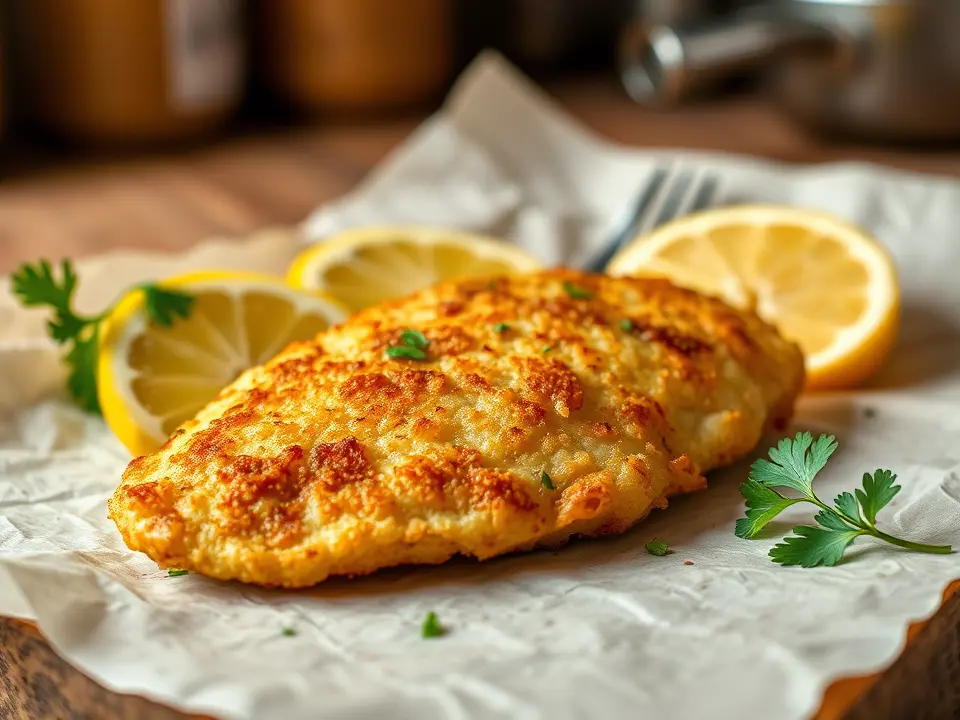 Golden chicken cutlets
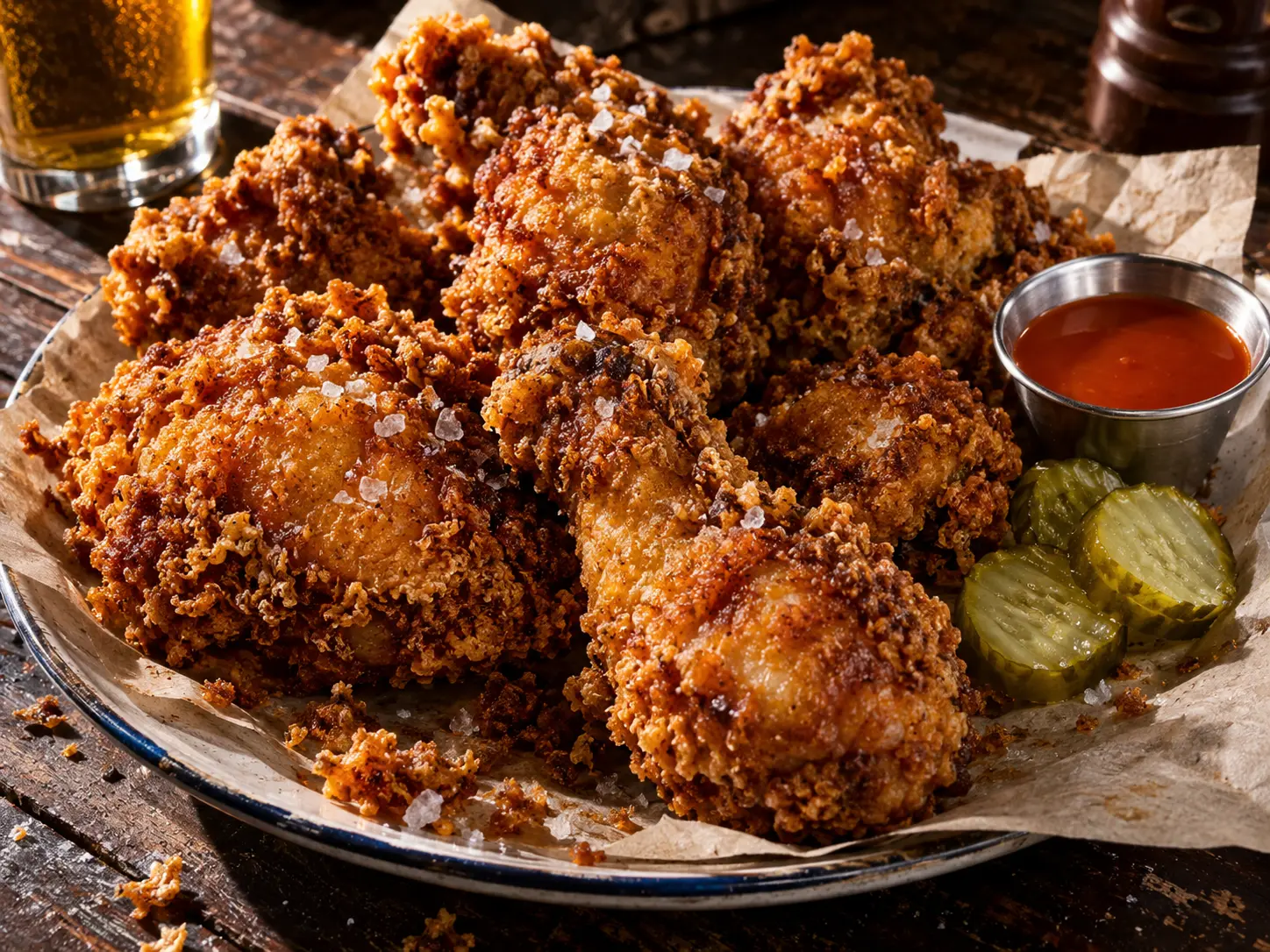 Craggy buttermilk fried chicken
 Crispy fried shrimp
Safety references
Check current guidance when cooking for food safety.