
Frying chicken wings vs drumettes: what changes?
Drumettes are meatier and take a minute or two longer. Flats get crispier skin. Both fry at the same temperature.
Wings and drumettes fry at the same oil temperature (375°F / 190°C). Drumettes, which are the thicker upper section of the wing, need one to two minutes longer than flats to cook through. If you are buying pre-cut "drumettes" by themselves, add a minute to the time you would use for party-mix wings. Both reach doneness when the skin is crisp and the juices run clear.
Whole wings (party wings)
A whole wing is cut at two joints into three pieces: the drumette, the flat (wingette), and the tip. "Party wings" sold at the store are usually just the drumette and flat together, tips discarded.
Pros
- Both the meatier drumette and the crispier flat in one bag
- Flat (wingette) develops very crispy skin due to its thin profile
- More variety in texture and meat-to-skin ratio
- Typically the most economical purchase per pound
Cons
- Drumette and flat cook at slightly different speeds; harder to nail both perfectly
- Flats can overcook by the time some drumettes are done
Best for: Crowd cooking where variety in texture is welcome
Drumettes only
The upper joint of the chicken wing, shaped like a small drumstick. More meat, less skin relative to the flat, and slightly thicker all the way through.
Pros
- More meat per piece — appealing to guests who prefer meaty bites
- Uniform size means they cook evenly as a batch
- Easier to hold and eat, especially with sauce
Cons
- Less crispy skin overall than flats because the ratio of meat to surface is higher
- Slightly longer fry time to cook through the thicker joint
- Usually cost more per pound than whole party wings
Best for: When you want uniform batches and a meatier bite, or for guests who prefer less skin
The anatomy of a chicken wing
A whole chicken wing has three sections joined at two bones. The drumette attaches to the body of the bird and looks like a miniature drumstick; it has one central bone and a thick band of meat. The flat (wingette) spans the middle and has two thin parallel bones with a thinner layer of meat and a generous amount of skin relative to the meat. The tip is mostly skin and cartilage and is usually discarded or saved for stock. "Party wings" at the store are drumettes and flats sold together with tips removed.
Frying temperature and time
Both sections fry in oil at 375°F (190°C). For a mixed batch of party wings, allow 8–10 minutes in batches with the oil returning to temperature between batches. For drumettes alone, plan for 10–12 minutes because the thicker joint needs slightly more time for the meat to cook through. Check by looking for crisp, deeply golden skin and clear juices at the joint. A food thermometer reading 165°F (74°C) in the meatiest part of a drumette is the reliable confirmation.
Crispiness differences
Flats get crispier skin than drumettes because they have more skin surface relative to the meat underneath. The thin, flat shape means moisture exits faster and the skin tightens against the surface more completely. Drumettes have a rounded, meaty shape; the skin crisps on the outside but stays slightly softer where it is directly against thick muscle. If maximum crispiness is the priority, flats deliver it. If a meaty bite is the priority, drumettes win.
Cooking mixed batches
When you fry a bag of party wings containing both drumettes and flats, the easiest approach is to cook them together and pull out the flats first when they look deeply golden. Give the drumettes another minute or two. Alternatively, fry them in separate small batches — drumettes first, then flats — so each gets the exact time it needs.
Sauce and finishing
Both sections absorb sauce the same way: toss immediately after draining while the skin is hot and dry. Drumettes hold sauce a little longer without going completely soft because their thicker meat cushions the skin from steam. Flats will soften faster in sauce, so if you are holding wings to serve later, sauce to order rather than in bulk.
Frequently asked questions
- What is the difference between wings and drumettes?
- A chicken wing has three sections. The drumette is the upper, meatier joint nearest the body, shaped like a mini drumstick. The flat (wingette) is the middle section with two bones and more skin. Party wings are drumettes and flats sold together, tips removed. "Drumettes" sold alone are only the upper section.
- How long do drumettes take to fry compared to wings?
- In oil at 375°F (190°C), drumettes take about 10–12 minutes. Mixed party wings (drumettes and flats together) take 8–10 minutes, with the flats done a minute or two before the drumettes. Always check that the thickest part reaches 165°F (74°C).
- Do drumettes or flats get crispier when fried?
- Flats get crispier because they have more skin relative to meat and a thinner shape that lets moisture exit quickly. Drumettes develop crispy skin on the outside but stay slightly softer where the skin is against thick muscle.
- Should I fry wings and drumettes at the same temperature?
- Yes. Both fry at 375°F (190°C). The difference is in fry time, not temperature. Drumettes need one to two minutes more than flats to cook through.
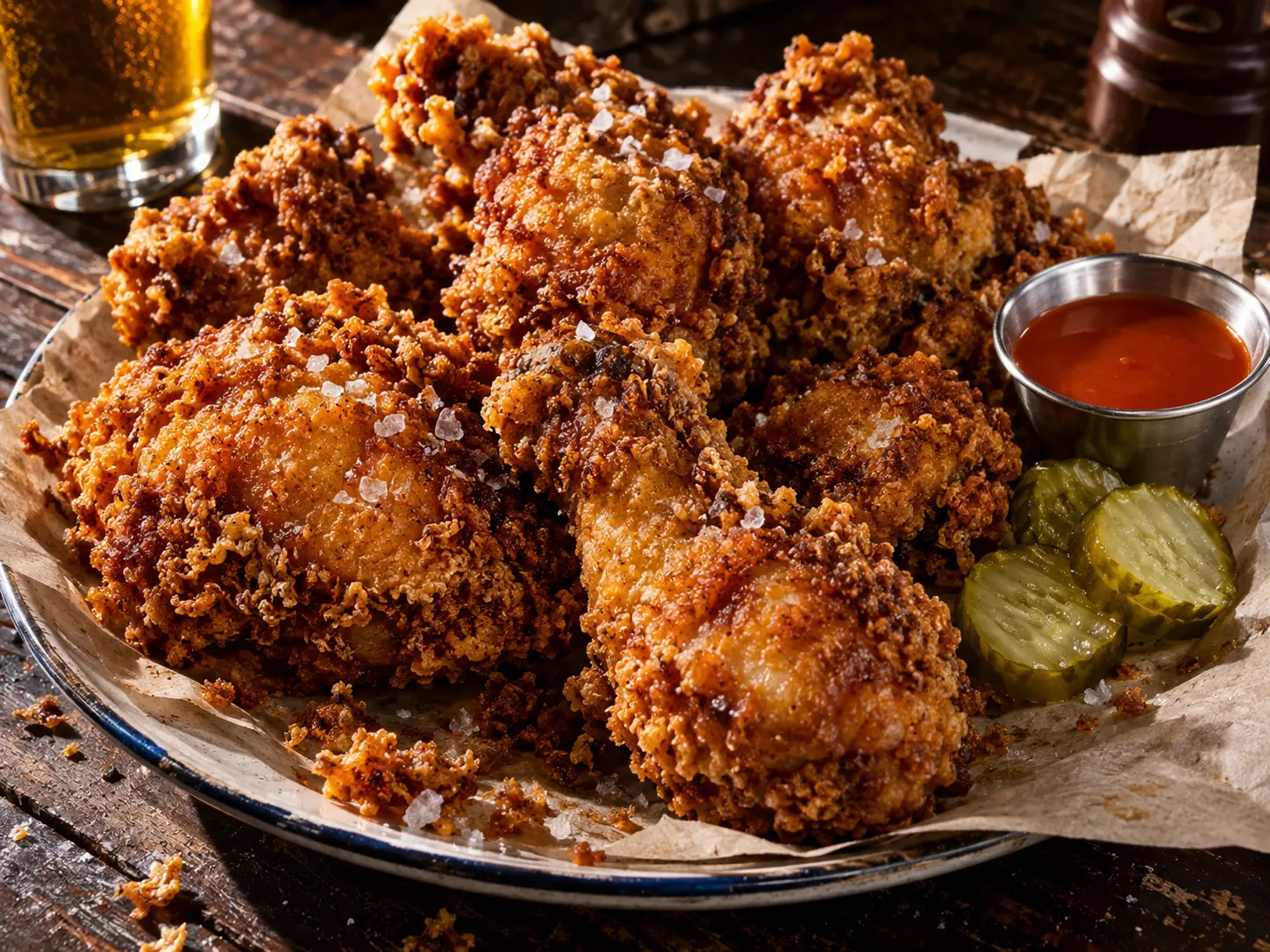 Craggy buttermilk fried chicken
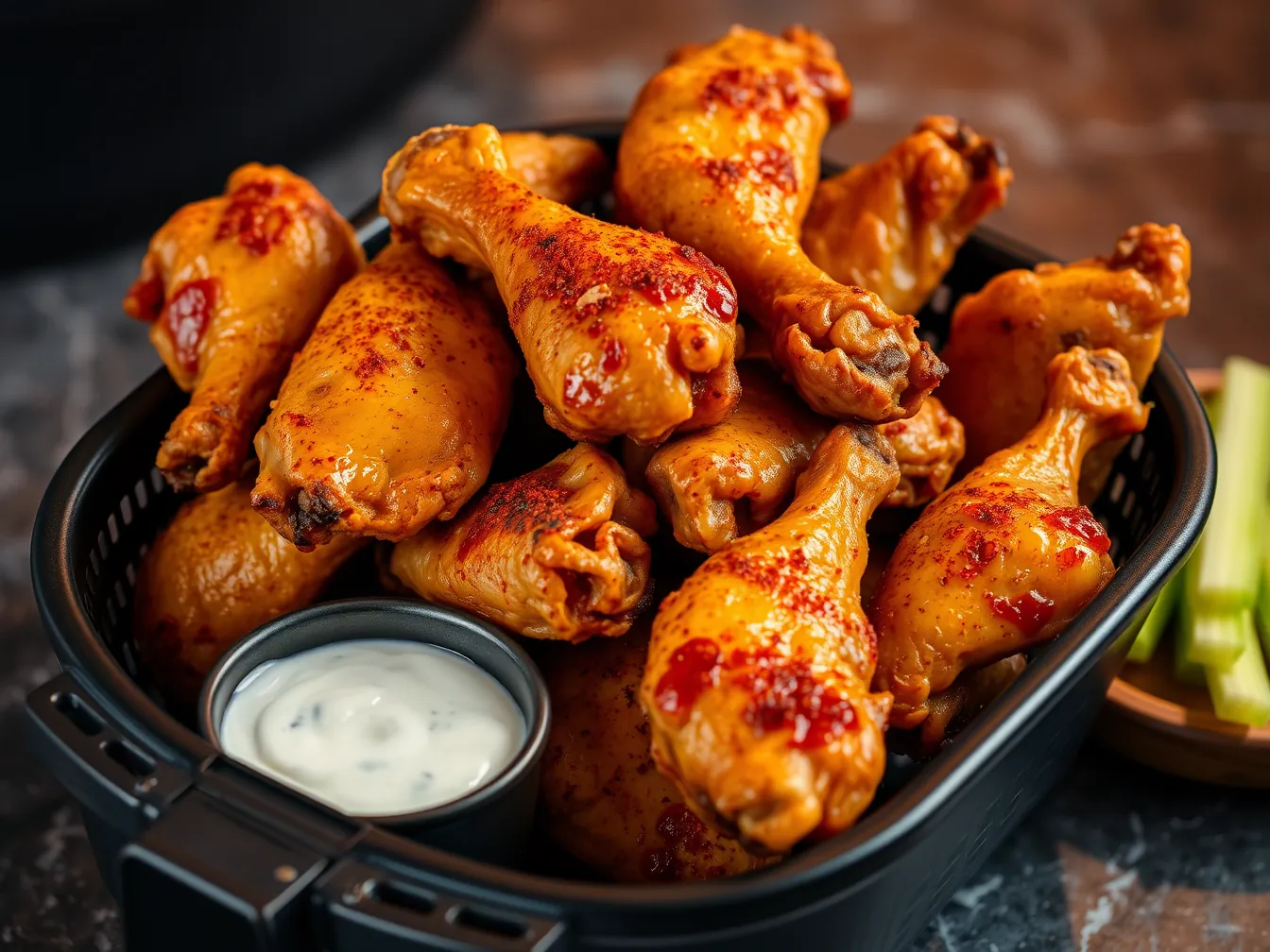 Two-stage air fryer chicken wings